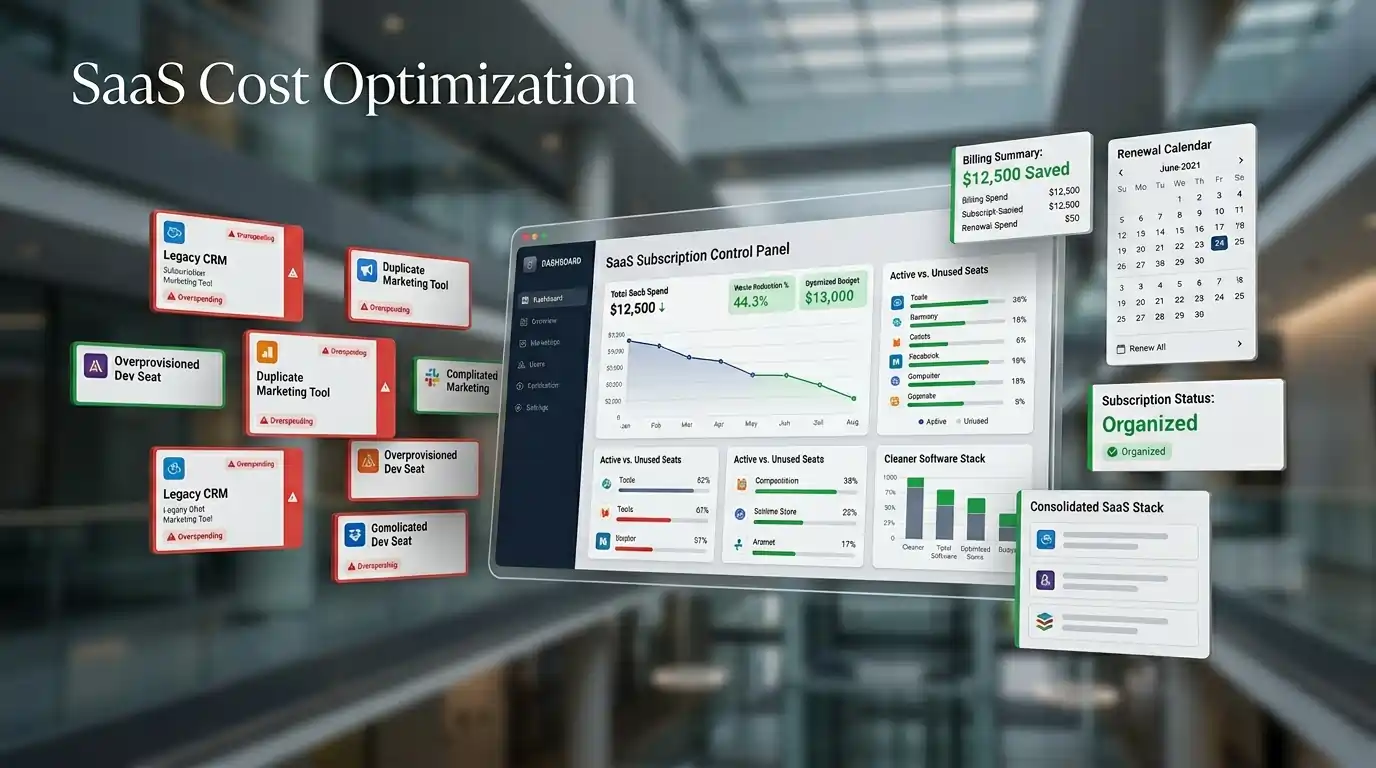
If you run a business, agency, or startup today, chances are you are paying for at least 8 to 15 software tools every single month. Some of those tools you use every day. Some you forgot you even signed up for. And some are quietly billing you for features your team has never touched.
This is exactly why saas cost optimization has become one of the most talked-about topics in the business world right now. Companies of all sizes are realising that they are spending way more on software subscriptions than they actually need to. The good news is – you can reduce software costs significantly without losing access to the tools that actually matter to your work.
In this guide, we are going to walk you through everything you need to know about SaaS savings tips, how to manage saas subscriptions smartly, and the exact strategies you can use to cut your software bills in half this year. Whether you are a solo freelancer, a growing startup, or an agency with a full team – this guide is written for you.
What Is SaaS Cost Optimization – And Why Does It Matter More Than Ever in 2026?
What Exactly Does ‘SaaS Cost Optimization’ Mean?
SaaS stands for Software as a Service. These are the tools and apps you pay for on a monthly or yearly subscription – things like Adobe Creative Cloud, LinkedIn Premium, ChatGPT Plus, Notion, Grammarly, Zoom, and hundreds of others.
SaaS cost optimization simply means reviewing all your software subscriptions and finding ways to reduce software costs without hurting your work quality. It is about making sure every rupee (or dollar) you spend on software is actually giving you value in return.
It is not about using cheap or low-quality tools. It is about being smart. It means you stop paying for duplicate tools, you stop holding onto subscriptions your team has stopped using, and you find better pricing options for the tools you really need.
Why Is Reducing Software Costs a Top Priority Right Now?
In 2026, the average small business spends between 20% to 30% of its total operating budget on software. That number was much lower just five years ago. The reason it has grown so fast is simple – there are more SaaS tools available than ever, and it is incredibly easy to sign up for a new one. Cancelling or tracking them is where people struggle.
According to multiple industry reports, businesses waste an average of 30% to 40% of their SaaS spending on unused or underused tools. This is why software cost reduction strategies are no longer just a nice thing to do – they are a business necessity. Especially for startups and small agencies that need to stretch every rupee as far as it can go.
Also Read – n8n vs Zapier: Which Automation Tool Is Better for Your Workflow in 2026?
🔥 LinkedIn Premium Business Plan 12 Months
Original Price ₹23,000 • Get it ₹8XXX
🤖 Gemini AI Advanced Pro Plan
Original Price ₹19,500 • Get it ₹8XXX
💼 LinkedIn Sales Navigator Core
Original Price ₹80,000 • Get it ₹2XXXX
🎨 Canva Pro Lifetime Access
Original Price ₹3,999 • Get it ₹4XX
📚 Coursera Plus Annual Plan
Original Price ₹33,000 • Get it ₹2XXX
✨ Adobe Creative Cloud All Apps
Original Price ₹59,000 • Get it ₹4XXX
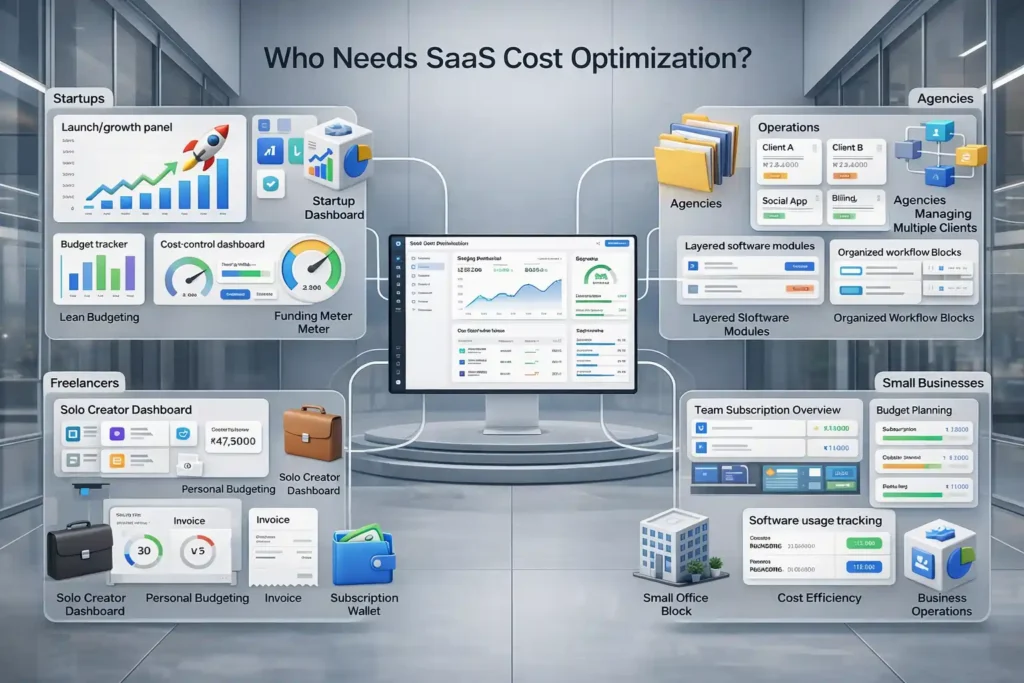
Who Needs SaaS Cost Optimization the Most?
The honest answer is – almost everyone who pays for software. But there are three groups that feel the pain the hardest, and they are the ones who benefit the most from getting this right.
How Startups Can Benefit from SaaS Budgeting Right from Day One
Startups often make the mistake of subscribing to every tool they see other successful companies using. They build a tech stack that looks great on paper but ends up costing more than their office rent. SaaS budgeting for startups is not just about saving money – it is about building a lean, efficient foundation from day one.
When you do proper saas cost optimization from the beginning, you free up a budget that can go into hiring, marketing, or product development – things that actually grow your business.
How to Reduce SaaS Costs for Agencies Managing Multiple Clients
Agencies have a unique problem. They often need premium tools – design software, project management platforms, SEO tools, communication apps – not just for their internal team but also for the work they do for clients. This means their software bill can be enormous.
Knowing how to reduce saas costs for agencies is a real skill. The best way to manage multiple saas tools as an agency is to audit what each tool is actually used for, find overlapping tools that serve the same purpose, and look for team or shared plans that give you more seats at a lower per-user price.
Why Freelancers and Small Businesses Overpay the Most
Here is something most people do not realise – individual freelancers and small businesses often pay the full retail price for software, while big companies get volume discounts and enterprise deals. This means the person who can least afford it is often paying the most.
Good saas savings tips can help a freelancer or small business owner save money on saas in ways they did not even know were possible. Shared plans, group licenses, and alternative pricing models can bring costs down by 50% to 85% – without losing any features.
Why Are Your SaaS Bills Getting Out of Control?
Before you can fix the problem, you need to understand what caused it. Most businesses do not consciously decide to overspend on software – it just happens gradually, quietly, over time. Here are the three main reasons why SaaS bills keep growing:
The Hidden Cost of Tool Sprawl – When More Apps Mean More Waste
Tool sprawl is what happens when a team adds new software without removing the old stuff. Someone finds a better project management tool, the team switches – but the old subscription keeps running. Someone signs up for a free trial that auto-converts to a paid plan. A team member recommends a new AI tool, so you add it without checking if you already have something that does the same thing.
This is one of the biggest reasons why the best way to manage multiple saas tools is so important. Without a system to track and manage saas subscriptions, you end up paying for a jungle of apps, most of which are either duplicates or completely unused.
Which Billing Traps Are Silently Draining Your Budget?
SaaS companies are extremely good at keeping you subscribed. Here are some common billing traps that drain your budget without you noticing:
- Annual plans that auto-renew – You sign up for an annual plan, forget about it, and it renews for another full year before you even notice. Cancelling at that point often means no refund.
- Per-seat pricing that keeps growing – Tools that charge per user are great when your team is small. But as you add people, the cost can balloon quickly without anyone actively deciding to spend more.
- Unused feature tiers – Many businesses are on premium or enterprise plans when they only use basic features. Downgrading to a cheaper tier would give them exactly what they need at a fraction of the price.
- Currency fluctuation charges – If you are paying for international SaaS tools in US dollars and the rupee weakens, your effective cost goes up without the price actually changing.
Is Your Team Even Using All the Tools You’re Paying For?
This is the most uncomfortable question – but also the most important one. Usage data consistently shows that in most companies, only 30% to 50% of licensed users are actually active on any given SaaS platform in a given month.
If you are paying for 20 seats of a project management tool and only 8 people are using it regularly, you are wasting money on 12 seats. Optimize software subscription costs by doing a proper usage audit and right-sizing your plans to match actual usage rather than theoretical need.
Also Read – Canva Pro vs Free: What Is the Real Difference in 2026?
🔥 LinkedIn Premium Business Plan 12 Months
Original Price ₹23,000 • Get it ₹8XXX
🤖 Gemini AI Advanced Pro Plan
Original Price ₹19,500 • Get it ₹8XXX
💼 LinkedIn Sales Navigator Core
Original Price ₹80,000 • Get it ₹2XXXX
🎨 Canva Pro Lifetime Access
Original Price ₹3,999 • Get it ₹4XX
📚 Coursera Plus Annual Plan
Original Price ₹33,000 • Get it ₹2XXX
✨ Adobe Creative Cloud All Apps
Original Price ₹59,000 • Get it ₹4XXX
Which SaaS Tools Drain the Most Money – And Which Ones Are Worth Keeping?
Not all software categories cost the same. And not all of them give you the same return on investment. When you are doing saas cost optimization, it helps to know which categories tend to be the most expensive – and which ones are worth every rupee you spend.
Which Categories of SaaS Cost the Most – AI, Design, or Productivity?
Here is a general breakdown of what businesses typically spend across different software categories and how to think about the value they deliver:
| Software Category | How Much Do Teams Waste Here? | What Happens If You Don’t Optimize? | How Urgent Is Action? |
| AI & Productivity Tools | Very High – most teams pay for 3-4 overlapping AI tools doing the same job | You keep burning budget on duplicate tools while your competitors use the same tools smarter and cheaper | Act Now – biggest overlap category |
| Design & Creative (Adobe, Canva) | Extremely High – full suite subscriptions often used for just 2 or 3 apps out of 20+ | Paying for an entire creative suite when you only needed one app is one of the most common and painful wastes in SaaS | Act Now – highest per-seat waste |
| Business & CRM Tools | High – per-seat pricing grows silently as teams expand without anyone reviewing the bill | A tool that made sense at 3 users becomes a budget disaster at 15 users if no one audits the seats regularly | Review Every 90 Days |
| Communication Tools (Zoom, Slack) | Medium – most teams pay for premium when the free tier covers 90% of their actual needs | You end up paying for video call minutes and message history you never use or needed in the first place | Downgrade – easy win |
| Learning Platforms | Medium – individual subscriptions purchased one by one instead of group plans | Every team member paying separately is always the most expensive way to access learning content | Switch to Group Plan |
| OTT & Entertainment | Low business value – often the easiest expense to cut or share | Entertainment tools funded by business budgets rarely survive an honest ROI check | Easiest to Eliminate |
How to Decide Which Tools to Keep, Downgrade, or Cut Completely
Use this simple framework to evaluate every tool in your stack. Ask these three questions about each subscription:
- Is this tool used by at least 70% of the people who have access to it? If not, you are over-licensed. Cut the number of seats or switch to a smaller plan immediately.
- Does this tool do something another tool in your stack already does? If yes, you are paying for the same job twice. Pick the better one and cancel the other.
- Would your work quality or speed drop significantly if you stopped using this tool tomorrow? If the answer is no or maybe, it is a candidate for cancellation. If yes, find a way to get it cheaper rather than removing it.
These software cost reduction strategies sound simple, but most businesses have never actually sat down and applied them. Doing this exercise once can save you more than you expect.
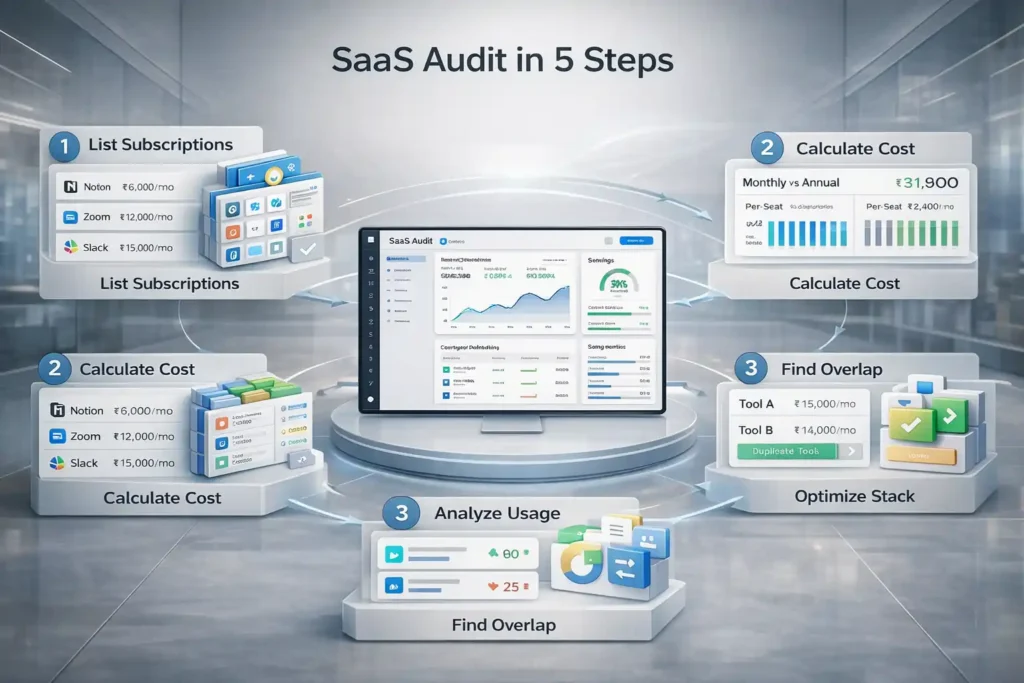
How to Do a Full SaaS Cost Optimization Audit in 5 Simple Steps
A SaaS audit is the most powerful action you can take to start saving money immediately. It takes about 2 to 3 hours to do properly, and the results are almost always eye-opening. Here is exactly how to do it, step by step.
Step 1: List Every Active Subscription You’re Currently Paying For
Start by pulling up your bank statements, credit card statements, and any payment accounts you use for business. Go back at least 3 months and write down every recurring charge. Many people are shocked by how many subscriptions appear that they completely forgot about.
The best way to manage multiple saas tools starts with knowing exactly what you have. Make a spreadsheet with columns for tool name, monthly cost, annual cost, number of users, and who approved the purchase. This becomes your master list.
Step 2: Calculate the Real Cost – Monthly, Annual, and Per-Seat
Once you have your list, do the full math. Many people only think in monthly terms and forget that they are locked into annual plans. When you see the annual total for your full SaaS stack, it is often a much bigger number than expected.
SaaS budgeting for startups and small businesses should always include this annual view. It gives you a clearer picture of your true software spend and makes the case for saas cost optimization much more real and urgent.
Step 3: Measure Actual Usage vs. What You’re Paying For
For each tool on your list, find out how many of your licensed users actually logged in and used the tool in the past 30 days. Most SaaS platforms show this data in their admin dashboard or billing settings.
If you do not have admin access, send a quick survey to your team asking which tools they use daily, weekly, and rarely. This usage data is the foundation of any plan to optimize software subscription costs. Without it, you are just guessing.
Step 4: Identify Overlapping Tools Doing the Same Job
Look at your master list and ask – are any of these tools doing the same thing? Common overlaps include:
- Paying for both Zoom and Google Meet when your team only uses one for actual video calls – the other one is just sitting there charged every month.
- Having both Notion and Trello or Asana for project management – teams often migrate from one to the other but forget to cancel the old one.
- Subscribing to multiple AI writing or content tools like Jasper, ChatGPT, and Grammarly Premium when one or two of them would cover everything you need.
- Holding on to both an old VPN and a new one because someone on the team signed up for a better option six months ago but the old subscription never got cancelled.
Removing these duplicates alone can reduce software costs by 20% to 30% in many cases.
Step 5: Create a Priority List – Cut, Downgrade, or Replace
Now that you have full visibility into what you are spending and what you are actually using, build your action plan. Put every tool into one of three buckets:
- Cut immediately – Tools that are unused, forgotten, or fully replaced by something else. Cancel these with no hesitation. This is free money coming back to you.
- Downgrade – Tools you still need but are on a plan that is too expensive for your actual usage level. Move to a lower tier, reduce seats, or find a shared plan option. This alone can save money on saas by 30% to 50% per tool.
- Replace or renegotiate – Tools you rely on but that have expensive official pricing. This is where looking at shared plans, group licensing, or platforms like PremiumToolsHub becomes very valuable. You keep the exact same tool, just at a much lower price.
Also Read – How to Use Adobe Creative Cloud for Graphic Design
🔥 LinkedIn Premium Business Plan 12 Months
Original Price ₹23,000 • Get it ₹8XXX
🤖 Gemini AI Advanced Pro Plan
Original Price ₹19,500 • Get it ₹8XXX
💼 LinkedIn Sales Navigator Core
Original Price ₹80,000 • Get it ₹2XXXX
🎨 Canva Pro Lifetime Access
Original Price ₹3,999 • Get it ₹4XX
📚 Coursera Plus Annual Plan
Original Price ₹33,000 • Get it ₹2XXX
✨ Adobe Creative Cloud All Apps
Original Price ₹59,000 • Get it ₹4XXX
Common SaaS Cost Optimization Mistakes Businesses Should Avoid
Even good teams make mistakes while trying saas cost optimization. The biggest mistake is treating software as cost only and ignoring value.
Avoid these errors:
- canceling a tool before checking who depends on it
- downgrading a plan that supports key work
- focusing only on price and not on time saved
- forgetting hidden usage fees
- not tracking renewal dates
- letting every department buy tools freely
- failing to manage saas subscriptions centrally
- keeping tools just because someone once liked them
A good saas cost optimization plan is not aggressive just to look efficient. It is careful, clear, and based on real usage.
When Is the Right Time to Cancel, Downgrade, or Switch a SaaS Tool?
Timing matters a lot when it comes to saving money on SaaS subscriptions. Cancelling at the wrong moment can cost you money instead of saving it. Here is how to think about timing:
When Should You Downgrade Instead of Cancelling?
Downgrading makes more sense than cancelling when you still genuinely need the tool but your current plan is overkill for your actual usage. For example, if you are paying for an AI tool’s enterprise plan because you signed up when your team was bigger, but now you only have 3 active users – downgrading to a smaller plan is the smart saas savings tip here.
Always downgrade before your renewal date. Most platforms will let you switch to a lower plan at the start of your next billing cycle, so timing it right means you do not lose any money on unused time you already paid for.
Downgrading is also a great move when you want to cut software expenses 50 percent without fully losing access to a tool. You keep the features you actually use, stop paying for the ones you do not, and reduce software costs significantly without any disruption to your work.
When Is Switching to a Shared or Group Plan the Smartest Move?
Switching to a shared or group plan is the smartest move when:
- You need premium features of a tool but cannot justify the official full price on your own – a shared plan gives you everything at a fraction of the cost.
- You are an individual professional or a small team where paying per-seat official pricing would eat too much of your budget – group access through verified providers makes saas cost optimization practical even at the individual level.
- You need short-term access to a tool for a specific project – buying a shared plan for one or two months is far more economical than committing to an annual individual subscription.
Also Read – Notion vs Obsidian – Best Knowledge Management Tool?
Where to Find Affordable Alternatives to Expensive SaaS Subscriptions
One of the most practical saas cost optimization moves you can make is knowing where to look for better pricing on the tools you already use. Most people just go to the official website and pay whatever is listed. But that is rarely the best deal available.
Where Do Smart Teams Find Premium Tools at Lower Prices?
Here are the most reliable places where businesses and individuals find genuine premium software at better prices:
- Official family and team plans – Many SaaS companies offer family or team plans that allow multiple users to share one subscription at a much lower per-person cost. This is often listed on their pricing page but easy to overlook.
- Annual billing discounts – Almost every SaaS platform offers a significant discount – usually 20% to 40% – if you commit to an annual plan instead of monthly billing. If you know you will use a tool for the whole year, this is an easy way to save money on saas immediately.
- Student and nonprofit discounts – Many tools like Adobe Creative Cloud, Notion, Grammarly, and others offer heavily discounted rates for students or registered nonprofit organisations. These discounts can be 50% to 70% off the standard price.
- Verified shared access platforms – These are services that bundle premium SaaS tools and offer them at shared plan pricing through legitimate group or corporate licensing. This is the most powerful software cost reduction strategy for teams and individuals who need access to multiple premium tools at once.
Is Shared or Group Licensing a Legitimate Way to Save Money on SaaS?
Yes – and this is one of the most misunderstood areas in saas cost optimization. Many people assume that shared access to premium tools must be illegal or against the terms of service. But that is simply not true when done through the right channels.
Legitimate shared licensing works through corporate plans, family plans, team workspaces, and authorized reseller programs – all of which the original software companies explicitly allow and support. When a trusted provider uses these structures to offer premium software access at lower prices, it is completely above board.
The key is making sure you are working with a provider who is transparent about how they structure access and who backs their service with a proper warranty and support system. That is exactly what separates a trustworthy platform from a sketchy one.
Also Read – How to Use Loom for Video Communication
Is PremiumToolsHub the Best Way to Manage Multiple SaaS Tools Without Overpaying?
If you have done your SaaS audit and identified the tools you need – but the official pricing still feels too high – this is where PremiumToolsHub becomes genuinely useful. It is one of the most practical solutions in the Indian market right now for saas cost optimization, and it serves freelancers, startups, agencies, and growing businesses across 15+ countries.
Which Premium Tools Can You Access at Up to 85% Off?
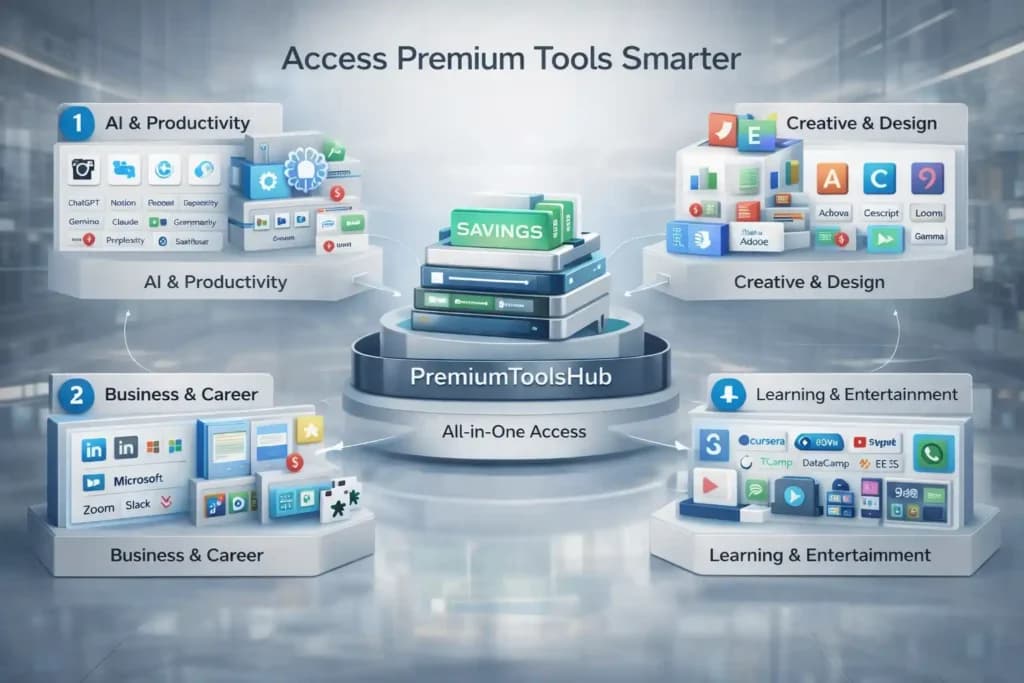
PremiumToolsHub offers access to a wide range of premium tools across four main categories, all at prices significantly lower than what you would pay directly. Here is a quick look at what is available:
| Category | Tools You Get Access To | What Most People Pay Officially | What Smart Users Do Instead |
| AI & Productivity | ChatGPT Plus, Gemini Advanced, Claude Pro, Perplexity Pro, Grammarly Premium, Notion Business, n8n Starter | Each tool billed separately at full retail – adds up to a number that shocks most people when they do the math | Access all of them through PremiumToolsHub at a fraction of what a single tool costs officially |
| Creative & Design | Adobe Creative Cloud All Apps, Canva Pro, Figma Professional, Descript Creator, Loom Premium, Gamma App | Adobe alone at official India pricing is more than most freelancers’ entire monthly software budget | Get the full Adobe suite plus Canva Pro and more – combined – for less than Adobe charges on its own |
| Business & Career | LinkedIn Premium Career, LinkedIn Business, Sales Navigator, Recruiter Lite, Microsoft 365, Zoom Pro, Slack Pro | LinkedIn Sales Navigator alone at official pricing is out of reach for most individual professionals and small agencies | Get LinkedIn access plus the full business suite through PremiumToolsHub without the per-seat pricing trap |
| Learning & Entertainment | Coursera Plus, edX Verified, DataCamp, YouTube Premium, Spotify Premium, NordVPN, Surfshark, ZEE5 HD, SonyLIV 4K | Subscribing to each of these individually means managing 8 to 10 separate billing dates and paying full price on every one | Bundle access through one trusted provider – one point of contact, one support team, dramatically smarter spend |
This is a massive range of tools – and being able to access all of them through a single trusted provider instead of managing 10 different subscriptions separately makes it much easier to manage saas subscriptions without losing track of what you are paying for.
How PremiumToolsHub Helps Agencies and Startups Cut Software Expenses by 50%
For agencies specifically, saas cost optimization through PremiumToolsHub works particularly well. Here is a realistic example of how it plays out:
- Through PremiumToolsHub, the same set of four tools can be accessed at a combined cost that is 60% to 85% lower – genuinely helping agencies and individuals cut software expenses 50 percent or more without giving up a single feature.
- For startups doing saas budgeting, this means the tools that were previously unaffordable become accessible from day one. A startup can build a complete professional software stack – AI tools, design tools, productivity platforms, and learning resources – at a price that fits a real startup budget.
- For agencies managing multiple clients and projects, knowing how to reduce saas costs for agencies through shared access means you can equip your full team with premium tools without the per-seat cost spiralling out of control as your team grows.
Is the Access 100% Legitimate and Secure?
This is always the first question people ask – and it is the right question to ask. PremiumToolsHub is fully transparent about how their access model works. All tool access is provisioned through legitimate shared workspaces, corporate or team licensing, family plans, and authorized reseller programs. No cracked software. No stolen accounts.
The platform also comes with a full warranty on every subscription. If anything stops working during your subscription period, the team fixes it or replaces it immediately. Support is available via WhatsApp from 9 AM to 12 AM IST – real people, not bots.
For any business or individual serious about saas cost optimization – this kind of reliable, supported, legitimate access model is exactly what makes the difference between a risky shortcut and a genuinely smart financial decision.
Also Read – LinkedIn Sales Navigator Pricing Guide
Conclusion: Start Your SaaS Cost Optimization Journey Today – Every Rupee Saved Is a Rupee Earned
Software spending has quietly become one of the largest expenses for modern businesses – and most teams have no clear picture of what they are actually spending or why. That changes the moment you decide to take saas cost optimization seriously.
Here is a quick recap of what we covered in this guide:
- SaaS cost optimization means reviewing all your subscriptions and making sure every tool you pay for is delivering real value – and you are not paying more than you need to.
- Startups, agencies, and freelancers all have specific reasons why reducing software costs matters deeply for their financial health and long-term growth.
- Tool sprawl, billing traps, and unused seats are the three biggest reasons most businesses overpay for software every month.
- A proper SaaS audit – covering your full list of subscriptions, usage data, and overlap analysis – is the most powerful first step you can take right now.
- Shared and group licensing through a verified provider like PremiumToolsHub is one of the most effective and legitimate software cost reduction strategies available today for individuals and teams in India and beyond.
You do not have to choose between having great tools and staying within your budget. With the right saas savings tips and the right provider, you can have both. The tools you need, at a price that makes sense, backed by real support.
If you want to see exactly how much you can save on your current software stack – the team at PremiumToolsHub is just a WhatsApp message away. No complicated sales process. No hidden fees. Just honest answers and real savings.
Visit premiumtoolshub.in or reach out directly on WhatsApp to get started. Your next software bill does not have to look like your last one.
– PremiumToolsHub| Your Partner in Smart Software Spending –