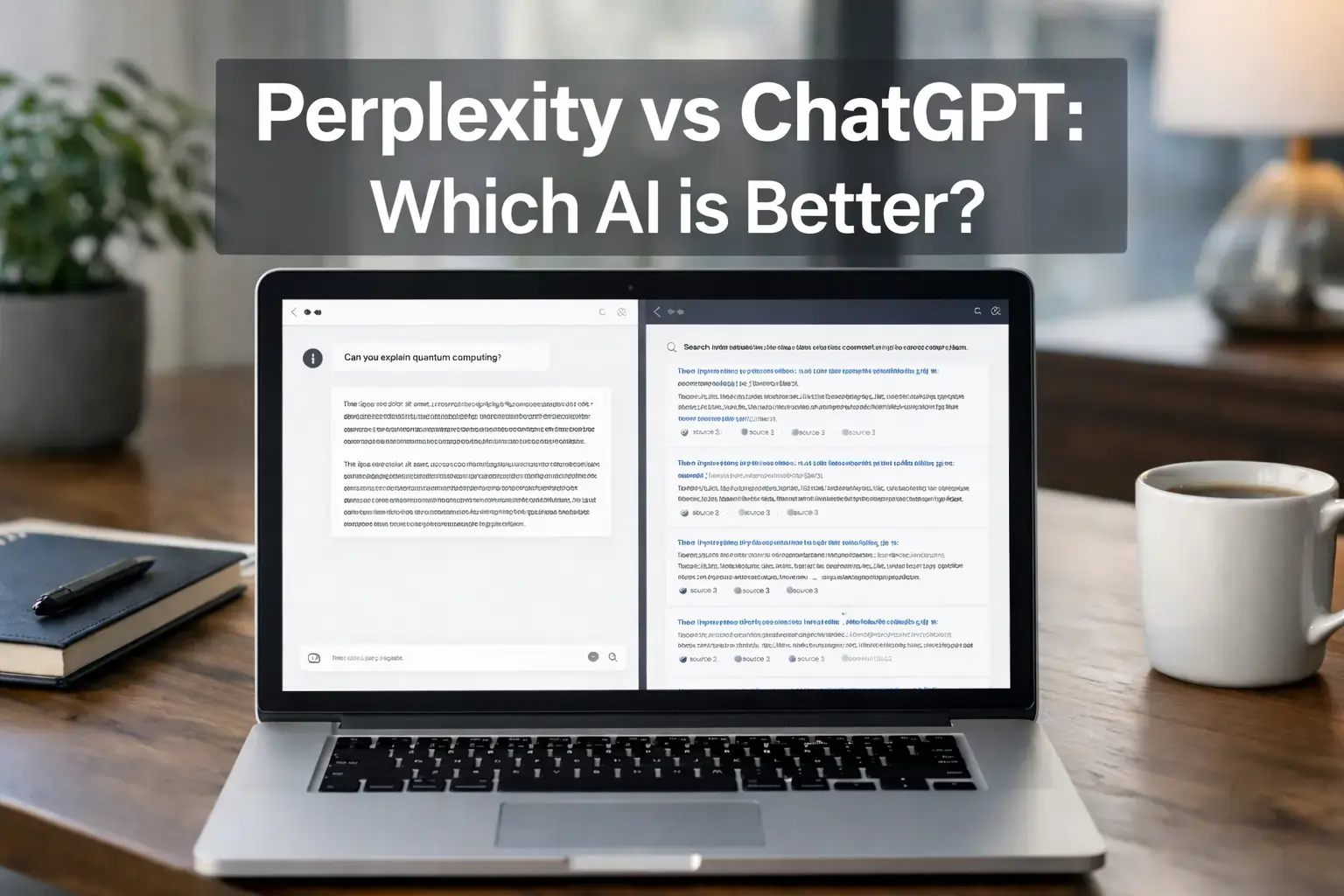
A Detailed Comparison of Accuracy, Pricing, Research Capability, and Real-World Use Cases
Introduction – Why Comparing AI Tools Matters
AI chatbots are no longer experimental tools. They are now used daily by students, writers, professionals, developers, and businesses for research, content creation, learning, and decision-making. Among the many AI tools available today, two names stand out in most discussions: ChatGPT and Perplexity AI.
Both tools are powerful, but they are built with different philosophies. ChatGPT focuses on conversational intelligence and creative reasoning, while Perplexity positions itself as a research-first AI that blends search with language models.
This article provides a clear, practical answer to the question: Perplexity vs ChatGPT – which AI is better, and for whom?
🔥 LinkedIn Premium Business Plan 12 Months
Original Price ₹23,000 • Get it ₹8XXX
🤖 Gemini AI Advanced Pro Plan
Original Price ₹19,500 • Get it ₹8XXX
💼 LinkedIn Sales Navigator Core
Original Price ₹80,000 • Get it ₹2XXXX
🎨 Canva Pro Lifetime Access
Original Price ₹3,999 • Get it ₹4XX
📚 Coursera Plus Annual Plan
Original Price ₹33,000 • Get it ₹2XXX
✨ Adobe Creative Cloud All Apps
Original Price ₹59,000 • Get it ₹4XXX
What Is ChatGPT?
ChatGPT is an AI chatbot developed by OpenAI. It is designed to generate human-like responses across a wide range of tasks, including writing, coding, brainstorming, tutoring, summarization, and general conversation.
ChatGPT excels at:
-
Long-form explanations
-
Creative writing
-
Code generation and debugging
-
Conversational problem-solving
It works best when the user needs reasoning, structure, or ideation rather than just factual lookup.
What Is Perplexity AI?
Perplexity AI is an AI-powered search and research assistant. Unlike traditional chatbots, Perplexity is designed to answer questions by actively citing sources from the web.
Perplexity excels at:
-
Research-backed answers
-
Source citations
-
Real-time information retrieval
-
Fact-focused queries
It behaves more like an intelligent search engine than a creative assistant.
🔥 LinkedIn Premium Business Plan 12 Months
Original Price ₹23,000 • Get it ₹8XXX
🤖 Gemini AI Advanced Pro Plan
Original Price ₹19,500 • Get it ₹8XXX
💼 LinkedIn Sales Navigator Core
Original Price ₹80,000 • Get it ₹2XXXX
🎨 Canva Pro Lifetime Access
Original Price ₹3,999 • Get it ₹4XX
📚 Coursera Plus Annual Plan
Original Price ₹33,000 • Get it ₹2XXX
✨ Adobe Creative Cloud All Apps
Original Price ₹59,000 • Get it ₹4XXX
Core Philosophy Difference
Understanding the philosophy behind each tool makes the comparison clearer.
ChatGPT’s Philosophy
ChatGPT is designed to think, reason, and generate. It prioritizes:
-
Language understanding
-
Context awareness
-
Multi-step reasoning
Accuracy depends on model knowledge and prompting quality rather than live search.
Perplexity’s Philosophy
Perplexity is designed to retrieve and summarize information from the web. It prioritizes:
-
Accuracy through citations
-
Transparency of sources
-
Research efficiency
It behaves less creatively but more verifiably.
Perplexity vs ChatGPT Accuracy
Accuracy is one of the most debated factors.
Perplexity often performs better for factual and current information because it cites sources and pulls from live web data. This makes it suitable for research, news, and academic-style queries.
ChatGPT, on the other hand, may provide highly confident answers that sound correct but can occasionally include outdated or incorrect information- especially without browsing enabled.
Verdict:
-
For factual accuracy → Perplexity
-
For conceptual accuracy and reasoning → ChatGPT
🔥 LinkedIn Premium Business Plan 12 Months
Original Price ₹23,000 • Get it ₹8XXX
🤖 Gemini AI Advanced Pro Plan
Original Price ₹19,500 • Get it ₹8XXX
💼 LinkedIn Sales Navigator Core
Original Price ₹80,000 • Get it ₹2XXXX
🎨 Canva Pro Lifetime Access
Original Price ₹3,999 • Get it ₹4XX
📚 Coursera Plus Annual Plan
Original Price ₹33,000 • Get it ₹2XXX
✨ Adobe Creative Cloud All Apps
Original Price ₹59,000 • Get it ₹4XXX
Perplexity vs ChatGPT for Research
Research workflows benefit greatly from transparency.
Perplexity is built for research. Every answer includes citations, allowing users to verify claims and explore original sources. This makes it ideal for students, analysts, and professionals who need traceable information.
ChatGPT is better for synthesizing ideas. It explains complex topics in simple terms, connects concepts, and helps users understand “why,” but it does not always show where information comes from.
Verdict:
-
Academic & factual research → Perplexity
-
Conceptual understanding & synthesis → ChatGPT
Perplexity vs ChatGPT for Students
Students often need both learning support and reliable information.
Perplexity is excellent for-
-
Quick research
-
Fact-checking
-
Source-based answers
ChatGPT is excellent for-
-
Explaining concepts
-
Writing assistance
-
Study planning
Best approach for students: Use Perplexity to find facts and sources, then use ChatGPT to understand and explain them.
Perplexity vs ChatGPT for Writers
Writers require creativity, structure, and tone control.
ChatGPT clearly outperforms Perplexity for:
-
Blog writing
-
Storytelling
-
Editing and rewriting
-
Style adaptation
Perplexity can help writers by:
-
Finding references
-
Summarizing articles
-
Validating claims
Verdict:
For writing → ChatGPT
For research support → Perplexity
Perplexity vs ChatGPT for Business Use
Business users care about speed, clarity, and decision support.
ChatGPT is useful for:
-
Drafting emails and proposals
-
Brainstorming strategies
-
Explaining complex ideas
Perplexity is useful for:
-
Market research
-
Competitor analysis
-
Data-backed insights
In business environments, Perplexity reduces risk through citations, while ChatGPT improves productivity through reasoning and communication.
Feature Comparison – ChatGPT vs Perplexity
Conversation and Reasoning
ChatGPT is superior in maintaining long conversations and reasoning across multiple steps. Perplexity answers tend to be shorter and more direct.
Source Transparency
Perplexity provides visible citations by default. ChatGPT requires browsing or external verification.
Creativity
ChatGPT is far more creative and flexible in tone, voice, and structure.
Learning Curve
Perplexity is easier for beginners who want answers quickly. ChatGPT rewards users who learn prompting techniques.
Perplexity vs ChatGPT Pricing
Pricing is another important factor.
ChatGPT offers a free version with limitations and a paid plan that unlocks advanced models and features.
Perplexity also offers free access, with paid plans providing enhanced models, faster responses, and deeper research capabilities.
Cost comparison summary:
-
Casual users → both free versions work
-
Power users → paid ChatGPT or Perplexity Pro depending on use case
UX and User Experience
User experience influences daily adoption.
ChatGPT feels like a conversation with a knowledgeable assistant. It encourages exploration and follow-up questions.
Perplexity feels like a powerful search interface. It encourages verification and structured learning.
Neither experience is “better”- they serve different mental workflows.
Limitations of Both Tools
ChatGPT Limitations
-
Can hallucinate facts
-
Requires good prompts
-
Not always up-to-date without browsing
Perplexity Limitations
-
Less creative
-
Shorter explanations
-
Limited conversational depth
Understanding these limitations helps users avoid over-reliance.
Which AI Is Better for You? (Use-Case Guide)
Choose ChatGPT if you:
-
Write content
-
Learn concepts deeply
-
Need brainstorming or explanations
-
Work with code or logic
Choose Perplexity if you:
-
Do academic or factual research
-
Need citations and sources
-
Track current information
-
Value verification over creativity
Can Perplexity and ChatGPT Be Used Together?
Yes- and this is often the smartest approach.
Many professionals use:
-
Perplexity to gather accurate, sourced information
-
ChatGPT to interpret, explain, and create with that information
Together, they form a powerful research + reasoning workflow.
The Future of AI Assistants
AI tools are rapidly evolving. The line between search engines and conversational AI is blurring.
ChatGPT is moving toward more accurate, tool-assisted reasoning.
Perplexity is becoming more conversational and contextual.
In the future, the “better AI” may be the one that adapts best to user intent.
Final Verdict – Perplexity vs ChatGPT
There is no single winner.
ChatGPT is better for creativity, reasoning, writing, and learning.
Perplexity is better for research, accuracy, and source-based answers.
Final Thought
If your priority is thinking and creating, ChatGPT is the better AI.
If your priority is knowing and verifying, Perplexity is the better AI.
For most serious users, the real advantage comes from knowing when to use which tool.